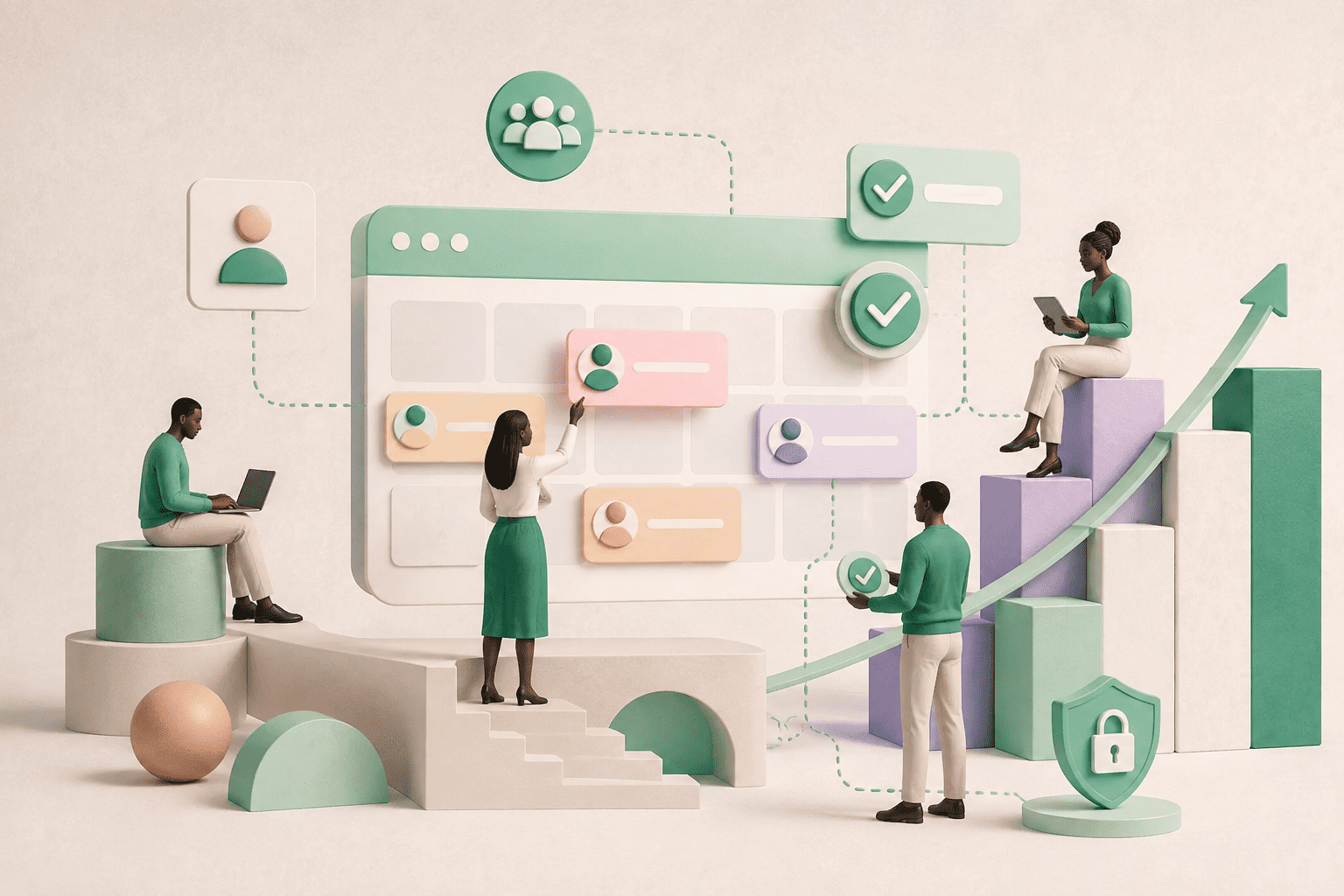
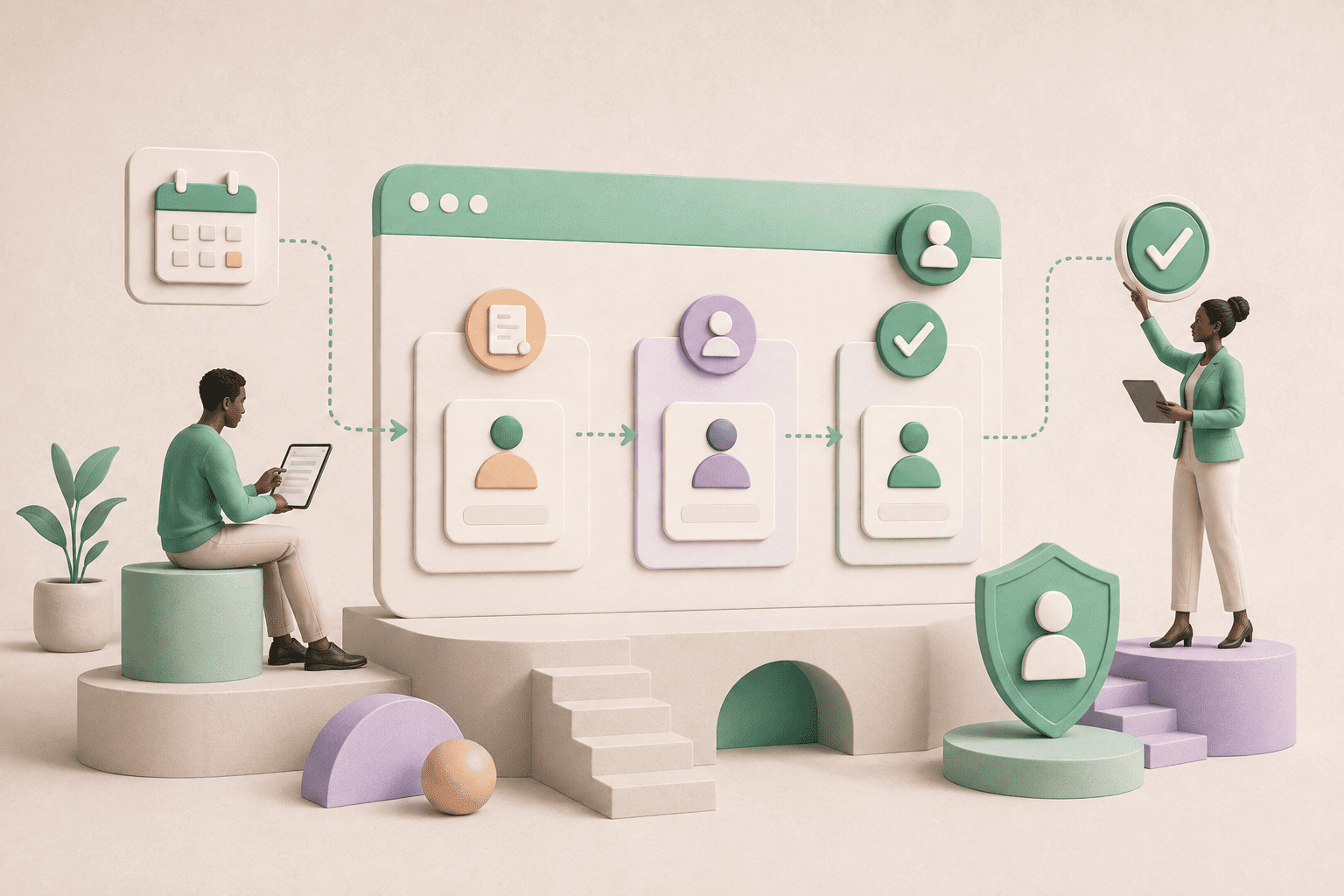
Continuous performance management is the alternative to the annual review cycle that leaves managers summarising twelve months of work in a 45-minute meeting. Instead of a once-a-year appraisal, it builds a rhythm of regular check-ins, real-time feedback, and goals that update as the business changes. This article explains what continuous performance management means, why it works better than traditional appraisals in Nigerian, Kenyan, and Ghanaian companies, and how to implement it with a lean HR team.
It arrives in December carrying notes about February. It asks a manager to summarise twelve months of work in a 45-minute meeting. It produces a rating, a form, and usually a quiet sense that the whole thing was slightly pointless.
Continuous performance management replaces that cycle with something simpler: regular conversations, real-time feedback, and goals that move when the business does. This article explains what it is, why it works, and how to set it up in an African company where HR resources are lean and managers are busy.
What continuous performance management means and how it works
Continuous performance management (CPM) is a system of ongoing feedback, check-ins, and goal tracking that runs throughout the year rather than as a single annual event. At its core, it replaces the retrospective appraisal with a forward-facing rhythm of coaching and alignment.
Research from Gallup shows that employees who had regular conversations with their managers about goals and progress in the previous six months were 2.8 times more likely to be engaged at work. That is not a marginal gain. It is the difference between a team that shows up and a team that invests.
A continuous performance management system does not mean constant performance reviews — it means building a regular rhythm around three activities: monthly check-ins, quarterly goal reviews, and ongoing feedback close to the moment of the work.:
- Monthly or bi-monthly check-ins between manager and employee (20-45 minutes)
- Quarterly goal reviews where OKRs or performance targets are assessed and updated
- Ongoing feedback given close to the moment of the work, not saved for year-end
Why annual reviews fail in most African companies
Replacing annual performance reviews matters because the annual review was built for a world where work was slow, roles were stable, and a year was a meaningful unit of time — none of which describes a fast-growing Nigerian, Kenyan, or Ghanaian business today. That world largely does not exist anymore, and in fast-growing Nigerian, Kenyan, and Ghanaian companies, it never really applied.
Without structured KPIs, employee assessments in many African businesses become biased and inconsistent. Performance appraisals conducted annually are often too late to correct poor performance or reward excellence, as seen across Nigerian SMEs where role clarity and documentation lag behind headcount growth.
Three specific failure patterns stand out:
Adobe Systems replaced its annual review process with regular check-ins and reported a 30% drop in voluntary turnover after making the switch. That is not just an HR outcome. It is a cost story: lower turnover directly reduces recruitment and onboarding spend.
The four pillars of a continuous performance management system
1. Regular check-ins
A check-in is a structured, recurring conversation between a manager and a direct report. It is not a status update. It is a coaching moment.
For most teams in Africa, monthly check-ins are the right cadence if weekly feels unsustainable. The conversation covers three things: what is going well, what is getting in the way, and what the manager can do to unblock progress. That structure keeps it focused and under 30 minutes.
2. Dynamic goal-setting
CPM replaces fixed annual goals with shorter goal cycles, usually quarterly. Goals are set, reviewed, and updated every 90 days. This matters because a Nigerian fintech company in a funding environment that shifts monthly cannot be operating against goals set in January and not revisited until December.
OKRs (Objectives and Key Results) are the most common framework for this. The objective is the direction. The key results are the measurable milestones. Setting them quarterly ensures they stay connected to actual business priorities.
3. Real-time feedback
Feedback in a CPM system is given close to the event, not saved for review season. A manager who observes a strong client presentation should say so that week, not six months later in a year-end form. A manager who notices a pattern of missed deadlines should raise it in the next check-in, not let it fester until it becomes a rating argument.
In cultures where hierarchy makes upward feedback uncomfortable, real-time feedback needs to be normalised explicitly. HR can do this by making it a stated expectation, not just a tool feature.
4. 360-degree feedback
Single-rater performance systems let one person's bias determine an employee's entire rating. A CPM system incorporates peer feedback, direct report feedback, and self-assessment to build a fuller picture. This is especially important in African companies where close-knit teams mean that a manager's view can be shaped by personal dynamics, not just professional observation.
Talstack's 360 Feedback feature allows HR teams to run multi-rater cycles continuously, so feedback is collected close to the moment of the work rather than all at once at year-end. Each rating is anchored to specific behaviours, which reduces the influence of personal relationships on scores.
How to implement CPM without a large HR team
Most African companies do not have a dedicated performance team. The HR function is lean, often one or two people managing the entire employee lifecycle. CPM has to fit that reality.
In companies where managers have 15 or more direct reports, a common constraint in Nigerian retail, banking, and FMCG businesses, group check-ins can work as a supplement to individual ones. A team pulse review of 60 minutes covering the whole team is better than nothing.
Table: Annual review vs. continuous performance management (key differences)
| Dimension | Annual Review | Continuous Performance Management |
|---|
| Frequency | Once a year | Monthly check-ins + quarterly reviews |
| Feedback timing | Delayed — often 6-12 months after the event | Close to the moment of the work |
| Goal setting | Fixed annual targets | Quarterly OKRs, updated as priorities shift |
| Rater input | Usually manager only | Manager + peers + self + direct reports (360) |
| Primary purpose | Retrospective evaluation | Forward-focused coaching and alignment |
| Employee experience | Anxiety, surprise, low trust | Clarity, coaching, psychological safety |
| HR workload | Heavy at year-end, nothing in between | Distributed across the year, lighter per cycle |
Quick checklist: are you ready to move to CPM?
- Managers currently hold at least one structured conversation per quarter with each direct report
- Goals are documented somewhere accessible to both manager and employee
- Feedback is occasionally given outside of formal review cycles
- HR can track whether check-ins are actually happening
- At least one senior leader visibly models the check-in habit
- Employees know how their work connects to team or company goals
Frequently asked questions
What is the difference between continuous performance management and a performance review?
A performance review is a formal, periodic evaluation of an employee's work. Continuous performance management is the system that runs in between reviews: monthly check-ins, real-time feedback, and rolling goal-setting. CPM does not replace performance reviews; it makes them shorter, less stressful, and more accurate because there are no surprises.
How do you implement continuous performance management in a company with no HR system?
Start with a check-in cadence. Give every manager a one-page check-in template. Set a monthly meeting with each direct report. Document the conversation in a shared note or simple spreadsheet. The technology is a nice-to-have; the habit is the requirement. Once the habit is stable, a lightweight performance management tool can automate the documentation and reminder cycle.
Does continuous performance management work in Nigerian and African companies?
Yes, and arguably it works better than the annual review in African business contexts. Many Nigerian, Kenyan, and Ghanaian companies grow fast, shift priorities frequently, and operate with lean HR teams. Continuous performance management is built for that environment: it requires less preparation per cycle, produces more usable data, and catches performance problems early enough to fix them.
How often should check-ins happen in a continuous performance management system?
Monthly is the most practical cadence for most African companies where managers have medium-sized teams. Weekly check-ins work for small teams or high-growth roles. The key is consistency: a monthly check-in that never gets cancelled outperforms a weekly check-in that gets skipped half the time.
What Talstack features support continuous performance management?
Talstack's Performance Reviews module supports structured review cycles that can run quarterly rather than annually. The 360 Feedback feature enables ongoing peer and multi-rater feedback outside of formal review periods. The Goals module supports quarterly OKR-setting and progress tracking at company, department, and individual level. Together, these features replace the year-end scramble with a consistent, year-round performance rhythm.
The bottom line
The annual review is not broken because it evaluates people. It is broken because it evaluates them rarely, late, and without enough input. Continuous performance management fixes those three things by spreading the work across the year.
The minimum viable version of CPM is simple: monthly check-ins, quarterly OKRs, and feedback given close to the moment it matters. You do not need a large HR team or an expensive system to start. You need managers who show up to the conversations and a leadership team that treats those conversations as work, not paperwork.
If you want to run CPM without spreadsheet chaos, Talstack's Performance Reviews module gives HR teams the structure to run quarterly review cycles, collect 360 feedback, and track goal progress in one place.






.webp)