Leave and absence management is the process an organisation uses to plan, approve, record and respond to employee time away from work. It covers planned leave, such as annual leave, and unplanned absence caused by illness, emergencies or other unexpected circumstances.
An effective leave/absence management process helps employees understand how to request or report time away. It also gives managers the information they need to plan work, maintain accurate records and apply workplace policies consistently.
Key takeaways
- Absence management is broader and can include unplanned absence, recurring patterns, employee support and return-to-work processes.
- The goal is not to prevent legitimate time away. It is to manage absence fairly, consistently and with as little disruption as possible.
- Leave management primarily covers authorised leave, including requests, approvals and balances.
What is absence management?
Absence management is the structured way an organisation manages both planned and unplanned employee absence.
It includes the policies, responsibilities, procedures and tools used to:
- Receive leave requests and absence notifications.
- Record employee time away.
- Monitor leave balances.
- Arrange work or shift coverage.
- Manage short-term and extended absence.
- Support employees returning to work.
- Review absence patterns.
- Apply workplace policies consistently.
Absence management should balance operational requirements with employee health, wellbeing and legitimate reasons for being away.
The Chartered Institute of Personnel and Development (CIPD) identifies absence measurement, clear absence policies, employee health needs, and the management of short- and long-term absence as connected parts of an effective approach to absence management.
What is leave management?
Leave management is the administrative process used to manage authorised employee time away from work.
It usually covers:
- Available leave types.
- Eligibility and entitlement rules.
- Employee requests.
- Manager approvals.
- Leave balances.
- Paid and unpaid leave.
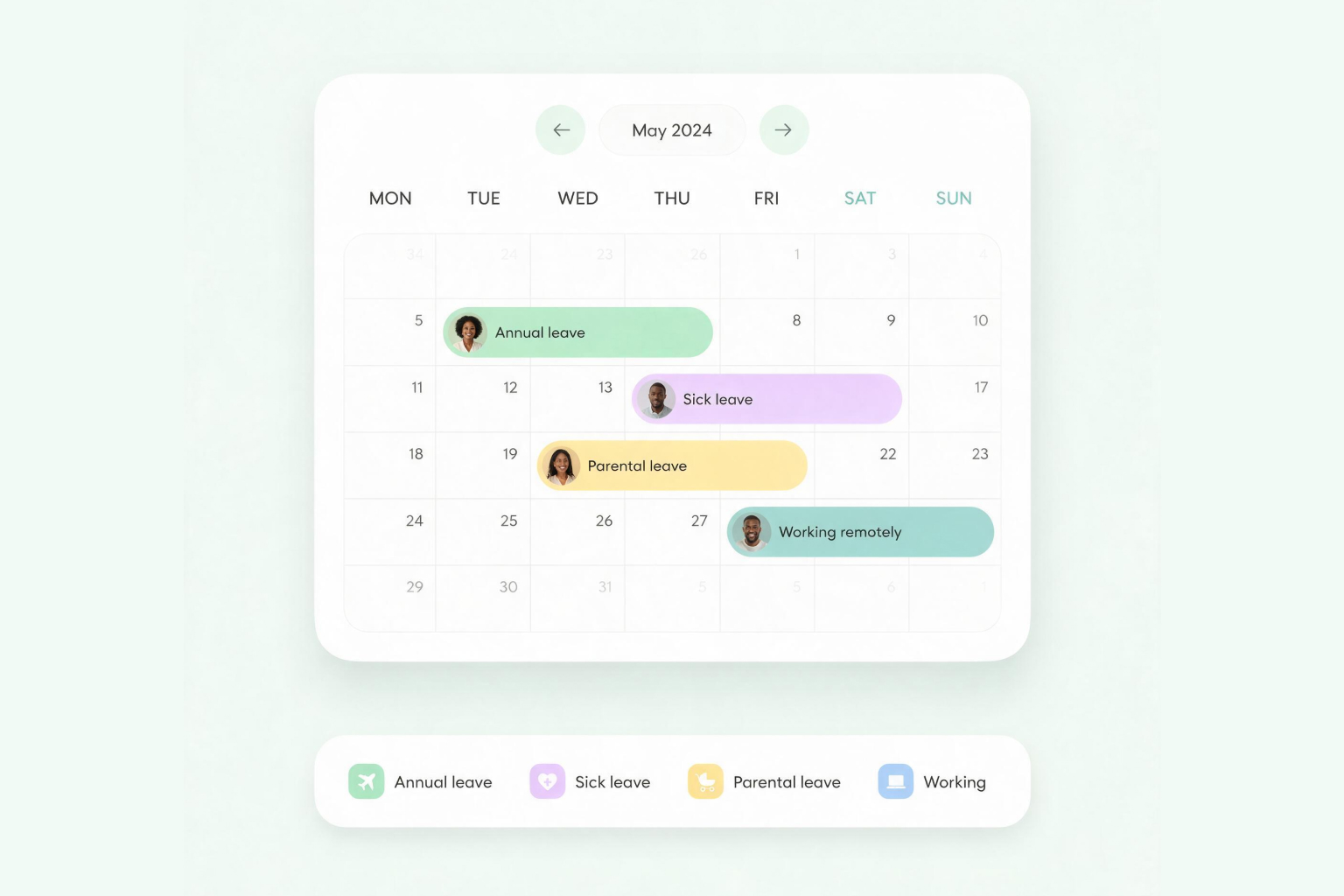
- Team calendars and work schedules.
- Leave records.
For example, when an employee requests annual leave, the leave management process determines how the request is submitted, who reviews it, whether the employee is eligible and how the approved absence is recorded.
What is the difference between leave management and absence management?
Leave management and absence management are closely related, but absence management generally has a wider scope.
| Area |
Leave management |
Absence management |
| Main focus |
Authorised employee leave |
All planned and unplanned absence |
| Common activities |
Requests, approvals and balance tracking |
Reporting, tracking, employee support and return to work |
| Typical examples |
Annual leave and approved personal leave |
Annual leave, illness, emergencies and extended absence |
| Main objective |
Administer leave accurately |
Manage time away fairly while maintaining continuity |
Organisations may use a single policy or system to manage both areas, which is why the combined term leave and absence management is often used.
Absence management is also different from general attendance management. Attendance management can include lateness, missed shifts and working hours, while absence management focuses specifically on periods when an employee is away from work.
What are the main types of employee absence?
Employee absence can be grouped according to whether it is planned, unplanned, short term, long term, paid or unpaid.
Planned absence
Planned absence is requested or communicated in advance. It may include:
- Annual leave.
- Scheduled medical appointments.
- Parental or caregiving leave.
- Study or examination leave.
- Planned unpaid leave.
- Other approved personal leave.
Advance notice gives the organisation time to review the request and arrange work coverage.
Unplanned absence
Unplanned absence occurs with little or no advance notice. It may result from:
- Sudden illness or injury.
- Family emergencies.
- Unexpected caregiving responsibilities.
- Mental health concerns.
- Transport disruption.
- Other unforeseen circumstances.
Unplanned absence cannot always be prevented. Employees should therefore have a clear and straightforward way to report it.
Short-term and long-term absence
Short-term absence usually lasts for a relatively brief period. Long-term absence continues for an extended period and may require agreed communication, workplace support or a return-to-work plan.
There is no universal point at which an absence becomes long term. Organisations should define relevant terms in their policies and follow the requirements that apply in each jurisdiction.
Why are leave and absence management important?
Leave and absence management helps organisations plan work, support employees, maintain accurate information and make consistent decisions.
- Better workforce planning: Managers need to know when employees will be unavailable so they can redistribute work, adjust deadlines, arrange shift coverage or complete handovers.
When requests are scattered across emails, messages and spreadsheets, managers may not have a reliable view of who will be away.
- A clearer employee experience: Clear leave procedures reduce the risk of similar requests being handled differently by different employees or managers. Employees should understand:
- Which types of leave are available.
- How to submit a request.
- How to report an unexpected absence.
- Who makes the decision.
- When they can expect a response.
- Support for employee health and wellbeing : Employees may need time away because of illness, injury, stress, mental health concerns, caregiving responsibilities or major life events.
The World Health Organization identifies excessive workloads, understaffing, inflexible hours, unsafe conditions and poor workplace relationships as potential risks to mental health at work. It recommends organisational action, manager training and appropriate support for employees.
Absence information can help organisations identify possible workplace concerns. However, a pattern should be investigated carefully rather than treated as automatic proof of misconduct.
- More accurate records: A reliable process helps organisations maintain accurate information about:
- Leave taken.
- Remaining balances.
- Request and approval dates.
- Absence categories.
- Paid and unpaid time.
- Expected return dates.
These records help HR, managers, scheduling teams and payroll teams work from consistent information.
- Compliance with applicable requirements: Leave entitlements, privacy obligations, documentation rules and employer responsibilities vary across jurisdictions.
The International Labour Organization recognises rest periods and paid annual leave as important elements of working-time standards. Individual organisations must still follow the specific employment laws, contracts and agreements that apply wherever they operate.
How does the leave and absence management process work?
A typical leave and absence management process has eight stages.
01
Establish policies
→
02
Request or report
→
03
Review
→
04
Make a decision
→
05
Update records
→
06
Maintain communication
→
07
Support the return
→
08
Review absence data
- Establish clear policies. The organisation defines its leave types, eligibility rules, reporting procedures, approval responsibilities and recordkeeping requirements.
- Submit a request or report an absence. For planned leave, the employee submits a request in advance. For an unexpected absence, the employee reports it as soon as reasonably possible.
- Review the request or notification. The manager or HR team reviews relevant information, such as eligibility, available leave, work coverage and policy requirements.
- Approve, decline or escalate. The organisation records and communicates its decision. Where a request cannot be approved, the reason should be explained clearly.
- Update records and schedules. The employee's leave record, balance and relevant team calendars are updated. Work may also need to be reassigned.
- Maintain appropriate communication. For an extended absence, the employee and organisation may agree on when and how they will remain in contact.
Communication should be proportionate, supportive and respectful of privacy.
- Support the employee's return. Following a longer absence, the organisation may confirm the return date, discuss the employee's readiness and consider temporary support or adjustments. The World Health Organization notes that return-to-work programmes may include work-related support, reasonable adjustments and phased returns alongside continuing care.
- Review absence information. HR and management can review aggregated data to identify administrative problems, staffing risks or potential workplace concerns. Absence data should provide context for informed decisions, not replace individual judgement.
What should an absence management policy include?
An absence management policy explains how employees should request leave or report an absence and how the organisation will respond.
It should cover:
- The purpose and scope of the policy.
- Available types of leave.
- Eligibility and entitlement rules.
- Procedures for requesting planned leave.
- Procedures for reporting unexpected absence.
- Notice requirements.
- Approval responsibilities.
- How decisions are communicated.
- When supporting information may be required.
- How absence records are maintained.
- Communication during extended absence.
- Return-to-work procedures.
- Confidentiality and data protection.
- How unauthorised absence is addressed.
- Where employees can ask questions or raise concerns.
The policy should be easy to find, written clearly and reviewed whenever organisational or legal requirements change.
The objective is not to eliminate employee absence. Some time away is necessary, expected or legally protected. The objective is to manage it fairly while helping the organisation continue operating effectively.
Conclusion
Leave and absence management gives organisations a structured way to manage employee time away from work.
A strong approach combines clear policies, simple reporting and approval procedures, accurate records, responsible use of absence information and appropriate employee support.
When these elements work together, employees have a clearer and fairer experience, while managers gain the information they need to plan work and maintain continuity.
Talstack Time Off helps organisations bring leave policies, requests, approvals and balances into one place, giving employees a simpler way to manage time off, managers better visibility into team availability, and HR teams clearer records to support compliance. Request a demo to see how Talstack Time Off works.
Frequently asked questions
Is leave management the same as absence management?
No. Leave management primarily covers authorised leave, requests, approvals and balances. Absence management is broader and may also include unplanned absence, recurring attendance patterns, employee support and return-to-work processes.
What is a leave/absence management policy?
An absence management policy explains how employees should request leave or report an absence, how decisions are made, how records are maintained and what responsibilities employees, managers and HR teams have.
Who is responsible for leave/absence management?
Responsibility is usually shared. Employees follow request and reporting procedures. Managers review requests and plan work coverage. HR develops policies, maintains records and supports complex cases. Payroll or finance may be involved where absence affects pay.
Can absence management reduce absenteeism?
Clear processes may reduce avoidable confusion, reporting problems and inconsistent decisions. They can also help organisations identify workplace conditions that may contribute to absence. Absence management cannot and should not eliminate legitimate employee time away.
What should organisations track when managing absence?
Organisations may track the type of absence, dates, duration, approval status, paid or unpaid status, remaining balance and expected return date. They should only collect information they are permitted to collect and genuinely need.






.webp)